

beyonce youtube |
- Normani’s “Motivation” Music Video Is Giving Major “Crazy In Love” Vibes - Refinery29
- I'm a Celebrity... Get Me on YouTube! - VICE
- MTV VMAS 2019: 4 winners and 2 losers, plus best and worst moments - Vox.com
- Lena Waithe: Why Beyonce's 'Homecoming' Isn't "Just Another Concert Film" - Hollywood Reporter
- Missy Elliott Performs with Original 'Work It' Dancer Alyson Stoner at 2019 MTV VMAs - Hollywood Reporter
| Normani’s “Motivation” Music Video Is Giving Major “Crazy In Love” Vibes - Refinery29 Posted: 16 Aug 2019 12:00 AM PDT  Normani honoured Beyoncé's solo debut video with a play on Bey's original "Crazy In Love" outfit of jean shorts and a halter top, a water dance scene, and, of course, fire choreography. Normani starts the video just like Beyoncé, walking in an alley and serving us looks for days, and ends with a dance sequence people will surely want to learn.  |
| I'm a Celebrity... Get Me on YouTube! - VICE Posted: 27 Aug 2019 11:00 AM PDT 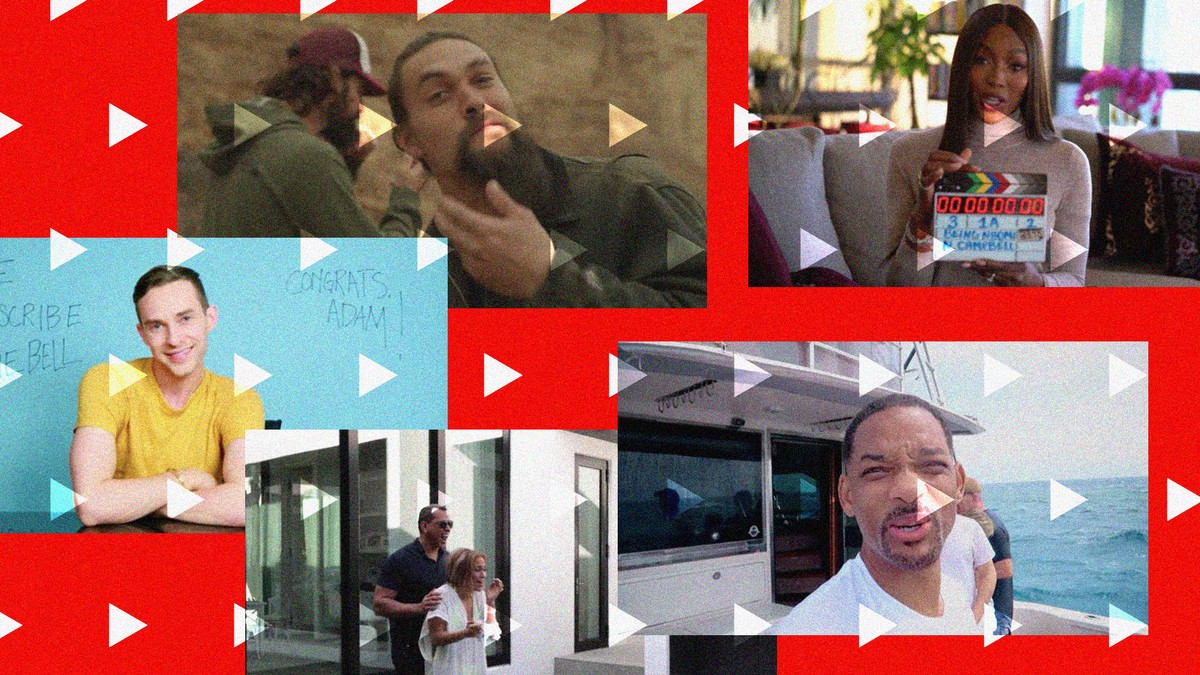 "Am I crazy?" Naomi Campbell asks in her very first vlog. "I'm opening my life to YouTube!" Campbell snaps a movie slate and laughs. She's wearing an oyster-colored turtleneck sweater. Her hair is long, pin-straight, and parted perfectly down the middle. She sits on a grey couch in what appears to be her home, or at least a very good approximation of what one assumes the home of a brilliant supermodel must look like, with bright pink flowers, gentle lighting, and soft throw pillows. She's not crazy. But she's also not alone. Campbell has joined a growing handful of very famous, very mainstream celebrities who have ventured into the wilds of YouTube, a platform known more than a smidge dismissively for sugary makeup gurus and Casey Neistat, and decidedly more seriously for extremism and the people who weaponize it. But over the past 20 months, Campbell—along with Will Smith, Jack Black, Zac Efron, Victoria Beckham, Jennifer Lopez, Alexa Chung, and Jason Momoa, among others—have ostensibly opened up their lives to the site's 2 billion monthly users. Others, like prodigal YouTube son Justin Bieber, are working with the company on "top-secret" original content. It feels somewhat surreal to watch someone who has been extremely famous for decades ask a 13-year-old sitting in her bedroom to "like and subscribe." YouTube has often felt like a place someone goes to become famous, not a place someone goes once fame has already happened to them. But there's a carefully constructed relationship between the ultra-famous and YouTube, one rooted in the platform's history, trajectory, and the shifting edges of celebrity. For now, it's one of delicate symbiosis. Our new celebrity vloggers recognize that on YouTube, authenticity—or the appearance of it—is king. Jennifer Lopez, who has more than 11 million subscribers, posted her first video, in which she meets with fans at FYE, on April 2, 2007. Her successive uploads were a similarly generic mix of official music videos, press clips, and behind-the-scenes snippets. Almost exactly 12 years later, however, she posted something different: a vlog titled "Welcome to my YouTube Channel!" She sits on a couch, wearing a thick sweater, her hair done up in an artfully messy top-knot. "What you're going to get here is more of Jennifer," she explains. "Jennifer the person." Campbell has a similar line in her introduction: "You get to see me as a real person." Elsewhere on the platform, you can watch Will Smith scuba diving in the blue expanse of the Great Barrier Reef, Jason Momoa shearing off his beautiful beard, Lopez celebrating her birthday, or Alexa Chung getting ready for the Met Gala. You can even follow actress Shay Mitchell as she navigates pregnancy with her own official series. "It's a fun way to break down that wall and for people to experience a more behind-the-scenes and real version of you," Adam Rippon, who launched his new-and-improved channel three months ago, told VICE. YouTube, he said, reached out to him after the 2018 Olympics and suggested he make a home on the platform. "[People are] seeing 20 minutes of you," he said. "You can sniff through if something feels authentic or not. People have that sixth sense of whether it's bullshit." For Momoa, his channel is part diary, part megaphone. Environmental activism is a big piece of it—the point of his beard-shaving video, which was shot while on location for Dune, was to advocate for aluminum over plastic. The other piece is exactitude. "For me, it's just being properly represented, and for people to really get to know you," he said. "It's letting people be a part of the journey that you're going through. I try to be the most honest I can, and transparent ... If they don't like it, then fuck it." Likewise, a person familiar with Lopez's social media strategy said that her revamped YouTube channel was partly intended to give her fans a behind-the-scenes look at her life. (Her formerly baseball-playing fiancée Alex Rodriguez, who joined YouTube in January, often posts videos mirroring the same events Lopez participates in, like her birthday and the Met Gala. It's slightly dizzying.) These celebrities clearly did not form their channels in a vacuum, or on a whim, but that doesn't mean YouTube is particularly interested in sharing its involvement in them. Throughout the process of reporting this story, YouTube offered to set up several celebrity interviews, but the company would only provide answers to VICE's questions on background. It was unwilling to provide any on the record statements without detailed knowledge of what our story would look like, despite repeated requests. YouTube's motives aside for now, the message from these celebrities is clear: This is the real me. Whether you believe that, of course, is up to you. Seasoned entertainers have expertly crafted images, no matter how many times they trip at the Oscars. They control what parts of their lives they allow people to see. But that's almost beside the point. "The key here is not that they are authentic, it's that they appear to be more authentic than they are in traditional media," David Craig, a professor of communication at the University of Southern California and a TV producer, said. "They don't have to be really real, they just have to be more real than the way Hollywood has portrayed them in the last century." Their aptitude for communicating authenticity varies. In January, Patricia Hernandez argued for The Verge that Jack Black—who joined the site in late 2018 and has already built up over 4 million subscribers—gets it right, noting that "there are no bells and whistles here, no fancy production or editing tricks." Watching Will Smith, on the other hand, "feels like watching commercial studio products from an official Movie Star." Momoa has adopted elements of Smith's jazzy production style, but his vibe isn't nearly as Hey, look at this huge movie star with a selfie stick as Smith's. (A blessed relief.) Occasionally, real flashes of daily life poke out, and you realize, maybe a little sadly, how much time celebrities spend on planes and dodging the claustrophobia that comes with hordes of screaming fans. Alexa Chung strikes a pleasing balance: her videos are elegantly produced, but they expose her razor-sharp, quirky intensity. She also dabbles in self-awareness (on her style: "I usually dress like a boy or a child") and transparency (on this ASMR video: "a shameless attempt to garner more followers and subscribers"). Regardless of where they fall on the gold star chart of realness, these attempts seem to be an inevitable response to widespread cultural hunger for access to other people's interior lives. "The audiences are less interested in seeing content with stars playing fictional roles, than they are as stars in their real environment," Moya Luckett, a media historian who focuses on celebrity and digital culture at NYU, said. "Celebrity is increasingly a component of every famous person's life—the tabloidism of what's going on." (Unless you're Beyoncé, whose militant commitment to privacy is, among other things, a purposeful display of her enormous power.) Luckett also pointed to shifts within Hollywood itself, explaining that branching out into YouTube is "a way of negotiating the precarity of the entertainment industry … I think it's really to do with a general sense of confusion in the industry, what's going to happen to broadcast television, what's going to happen to film." When its organic stars are 20-somethings who do the kinds of dumb, offensive things that 20-somethings who have amassed huge followings and fortunes do, celebrities—media-trained, groomed, predictable—start to look mighty appealing. If you define success for a celebrity as getting their brand in front of as many eyes as humanly possible, YouTube, with its global reach and appealingly youthful user base, makes perfect sense. The typical motivators for a lower-tier YouTuber—advertising and sponsorship dollars—may not even matter to a mainstream celebrity, as long as they're expanding their reach and banking on it to pay off down the line. (Reps for Will Smith, Jack Black, and Alexa Chung declined requests to speak with VICE about said channels, while reps for Naomi Campbell, Zac Efron, Victoria Beckham, Justin Bieber, and Alex Rodriguez did not respond to emailed inquiries.) It also offers other advantages. It gives a celebrity's fans a space to connect with one another. It leaves room for editing, producing, and planning, unlike, say, Instagram Stories. It cuts out middlemen like Hulu, Netflix, The Late Show, or a magazine profile, and hands a celebrity unwavering control over their message. There's also a track record of success in the form of a powerful ecosystem of big, platform-famous stars—think Jake and Logan Paul, Huda Kattan, James Charles, and Ninja—with piles of money and hordes of young fans. They've cultivated all of this outside traditional media, and in the process, they've established new pathways to fame. Mainstream celebrities increasingly seem to be waking up to this. "We now live in a world where celebrities are encouraged to diversify and self-brand. This is just another way," said Luckett. "It's the same appeal as a fashion line. It's being in all the different places that might capture attention. A sense, and maybe a fear, the online streaming platforms might be the future." There is, of course, another benefit. Celebrities have the support of YouTube itself. Momoa said that the company "helped with the marketing side" for his channel, while chief business officer Robert Kyncl bragged at an industry event that Justin Bieber's still-mysterious show would be "one of the most talked-about YouTube originals ever." Between this and the hyping of Will Smith—he opened the 2018 Rewind video, a yearly compilation of the platform's biggest moments—it's good to be a celebrity on YouTube. The first video ever posted to YouTube is called "Me at the zoo." It stars Jawed Karim, one of the site's founders, at the San Diego Zoo, talking about elephants. It has over 74 million views and its own IMDb page. These beginnings—unpolished, casual, slice-of-life—held firm, even as the platform evolved. Now, however, YouTube sits at a peculiar intersection. One side is home to a flourishing creator network, where makeup gurus, scientists, activists, gamers, comedians, ukulele players, and any other sub-community you can think of upload a diverse smorgasbord of material for a dedicated and eager audience. The other side touts Vevo music videos, segments from late night shows, content from magazines like Wired and Vogue, and our celebrity vloggers. For years, YouTube has courted Hollywood, traditional media, and household names—and, as a result, corporate advertisers and big money. In late 2011, after several months of careful flirtation, the company launched a program known as the Original Channel Initiative. The original effort reportedly cost more than $100 million and lured huge names like Pharrell, Sofia Vergara, Hearst, and the Wall Street Journal to create original content. (It was not entirely successful.) It has dipped its toe in the movie streaming business, adding full-length titles to its enormous library in 2008 and again in 2018. It also retains what it calls partner managers, who are the primary point of contact between YouTube and the celebrities, public figures, and traditional media companies who use it. (There are also teams of partner managers that work with creators and digital publishers, among other factions.) In 2018, YouTube hired Derek Blasberg, a prominent industry figure, to build out its fashion and beauty partnerships. Three channels he helped launch, according to Vogue Business? Those of Naomi Campbell, Alexa Chung, and Victoria Beckham. The magazine noted that Blasberg and his army of famous friends may help YouTube compete with Instagram when it comes to US advertising revenue, particularly in the fashion space, where Instagram has traditionally dominated. (The Facebook-owned platform hired Lucky's Eva Chen to fill a similar role in 2015, to much fanfare.) Blasberg sees it differently. "I don't look at Instagram the same way I look at YouTube. I watch YouTube in a similar way that I used to watch television," he told Vogue Business. Our celebrity vloggers may be using YouTube as just another social platform, but their use for YouTube is something much grander. "It's part of a broader strategy to catch up with Amazon, Netflix, and Hulu, who seem to have leaped to the next generation of paid video," Arun Sundararajan, a professor of business at NYU who studies technology, argued. "It's a way for YouTube to try and integrate itself more with people's idea of mainstream entertainment ... they've been trying to see if they can be a player in the successors to cable television," he said. "There's a generation of people who get their television on YouTube, but the people who used to watch television have transitioned to Netflix and Hulu." (It will soon have a new crop of competitors, as both Apple and Disney plan to launch streaming services this year.) Alphabet, YouTube's omniscient overlord, is in the advertising business, after all. Video entertainment has always been part of that. "Going after a greater fraction of the video entertainment market seems like a perfectly natural thing for them to be doing," Sundararajan said. YouTube Premium, the platform's paid subscription service, is another move toward slurping up the dollars people spend on "mainstream home entertainment," as he terms it. It's admittedly difficult to pinpoint where exactly to place YouTube relative to its competitors, however, primarily because Alphabet doesn't disclose the platform's revenue or profit figures—instead, they're simply tallied up with Google's overall numbers. (YouTube didn't answer questions about its financial numbers for this year.) Our best guess comes from Wall Street, which estimates that it brings in between $16 billion and $25 billion in revenue per year, according to a recent report in the New York Times, which puts it in line with Netflix. In sum, this new generation of celebrity vloggers fits right in with YouTube's documented strategy of courting Hollywood, and with its larger plan to compete going forward. "Why wouldn't you wine and dine, throw some parties, ask them how you can support them?" said Sean Cannell, a YouTuber and author of a book about YouTube marketing. "We don't blame a college recruiter for going to a college basketball game. They're recruiting for the platform." But there's also something more recent, and distinctly more serious, to consider: YouTube's wildly toxic content moderation problem. The examples are so numerous and so severe that it has become impossible to talk about the company without mentioning them. Child pornography, crisis actors (old and new), mass shootings, Pizzagate, QAnon, white supremacists, neo-Nazi talking points, pedophilia, and harassment campaigns have all found a home on YouTube. It has also faced significant issues in its own backyard. In 2017, Pewdiepie was removed from Google's premium advertising tier and booted from YouTube's premium subscription service for posting several videos featuring anti-semitic content. A year later, Logan Paul ignited a furious, prolonged backlash after he uploaded a video that showed a man who had died by suicide. Advertisers have reacted predictably. In 2017, companies like Starbucks, Wal-mart, and Adidas pulled their ads after they appeared next to inappropriate content. Earlier this year, a new slate of companies were reported to have boycotted the platform after similar allegations surfaced yet again. In the context of these failures—and the resulting controversies—it tracks that YouTube would open its arms to celebrities. When its organic stars are 20-somethings who do the kinds of dumb, offensive things that 20-somethings who have amassed huge followings and fortunes do, celebrities—media-trained, groomed, predictable—start to look mighty appealing. When advertisers are fleeing en masse and every news story brings a fresh spate of terrible publicity, what better way to placate shareholders than with A-list names and safe, familiar content? (The company wouldn't comment on the record about its content moderation issues, its appeals to advertisers, and whether the celebrities receive payment from YouTube outside of money they make from advertising, among other questions.) "It's a situation where you know what you're gonna get," said Jesse Cox, a YouTuber and co-creator of a YouTube Red series. Cox argues that the platform "incentivizes people who are more outlandish," but that with celebrities, that issue dissipates. "At least you know their public face ... there's less of a fear they're going to do something crazy and wild." Non-Hollywood YouTubers, by virtue of their relative lack of fame, gravitate toward more outlandish stunts. (Or they do so in an attempt to hold on to what fame they have garnered, à la Paul.) Celebrities, on the other hand, just get to do the things they normally do. There's a danger in careening too far into Hollywood, however. YouTube's uniqueness as a platform, and its early success, is thanks in large part to its independent creators and their fans—a community that has started to feel alienated. Will Smith's aforementioned appearance in the 2018 Rewind video is the clearest example. It became the most downvoted video in YouTube's history, and prompted a slew of criticisms that it was straying from its creator base. Even Susan Wocjicki's kids weren't impressed. The frustration over Smith's top-billed appearance comes from both small creators and pockets of YouTube's audience, who chafe at the corporatization of their beloved platform. "There are so many people making videos, and so many people struggling to get to the top," said Cox. "Most people see it as a little lopsided that the people who already have a massive advantage ... are promoted by the site more." There are more insidious routes to alienation. Demonetization, or limiting ads—and thus revenue—on specific videos has become YouTube's default response when content moderation issues crop up. It has also upset many independent creators, who, besides losing income, see it as a way to placate advertisers by punishing the powerless—the users who helped make the platform what it is today. YouTube likes to point to the ways in which it has hoisted up these creators, of course. (It should be noted that it's one of the few platforms with a history of actually paying its creators.) It brags about its most popular homegrown faces and sits down with them; it has programs like the Creators Academy, which provides growth-focused educational resources; it features creators in its year-end videos; it talks about how important they are. It has worked, insofar as it continues to attract anonymous vloggers with dreams of stardom. As Sean Cannell put it, "If there's an American dream, it's the YouTube dream." Nailing down the delicate balance between traditional media and organic content is one of many tasks for YouTube going forward. But according to Louisa Ha, a professor of media production and studies at Bowling Green State University and editor of The Audience and Business of YouTube and Online Videos, it's necessary. "In order to continue to dominate, there has to be both," she said. "People have to accept that a medium is evolving," Ha added. "It's not the same all the time. 10 years ago, it was all amateur content ... if it went that way, it would probably go bankrupt." In some ways, the efforts to bring celebrities aboard is a way of combining the two. The stars, after all, are vlogging—a pastime popularized by the platform's homegrown talent. Netflix and Amazon have the boring, mainstream stuff, it seems to be saying. But we have the behind the scenes action. Derek Blasberg explicitly encourages this line of thinking with Campbell, Beckham, and fashion companies, telling them to "think like a creator." As the nature of fame catches up with the vociferous technological wildfire that continues to spread, it naturally must adopt the things that made these platforms so popular in the first place. There will be more of Will Smith celebrating his son's birthday and Naomi Campbell frantically scrubbing a plane seat, whether we like it or not. And there will also be the reverse. The weirdness—the parts of the internet that made it fun—will be diluted by flashier, savvier content. Nobody said symbiosis lasts forever. Sign up for our newsletter to get the best of VICE delivered to your inbox daily. Follow Sophie Kleeman on Twitter.  |
| MTV VMAS 2019: 4 winners and 2 losers, plus best and worst moments - Vox.com Posted: 26 Aug 2019 08:26 PM PDT  In the grand scheme of the entertainment landscape, an MTV Video Music Award isn't exactly the prestige-filled honor that an Oscar or Grammy is. The annual awards ceremony is really more about the performances, the outfits, and the controversies than it is the competition. But that doesn't mean there aren't winners and losers from the evening to discuss. A dazzling performance can turn an obscure artist into a household name or cement an established deity like Beyoncé's legendary status. And a dismal performance can be quite a blow — just ask the Chainsmokers. The 2019 VMAs upheld this tradition, a night that cemented a few winners and served up a couple of losses that may be hard to shake off. Winner: Missy ElliottThere were only a handful of moments during the 2019 VMAs that we wished could have lasted longer. The epitome of said moments was Missy Elliott's performance to celebrate winning this year's Michael Jackson Video Vanguard Award. Elliott's medley was slick and stylish, flashing back to iconic looks from her iconic video "The Rain" and creating live-action spectacles of her dance hits; she even turned "Pass That Dutch" into an alien invasion, with people getting beamed up into a spaceship hovering above the stage. It showcased the creativity and visual artistry behind her work while reminding us how addictive her best songs are. Loser: the VMAsOne of the big questions of the night was why this year's show was in held in Newark, New Jersey, instead of New York City or Los Angeles or a smaller, more music-inspired choice like Nashville or Atlanta. The ceremony also lacked star power, with no Beyoncé or Ariana Grande in the house, no chaotic energy from Kanye West and Kim Kardashian, and a bland and cringey comedian for a host. Remember, this is a show with a history of serving up unforgettable moments — think Madonna's "Vogue" performance; Britney and the snake; Lady Gaga bleeding from rafters. This relatively snoozy 2019 edition left us wondering if Newark was actually doing the VMAs a favor by agreeing to provide a venue. Winner: New Jersey(?) for some reasonThe VMAs were held in Newark this year, for reasons that remain unknown. Does the New Jersey board of tourism have unexpectedly impressive reach? Are the VMAs a little bit more broke than we realized? Did someone at MTV genuinely just want to celebrate the rich musical culture of the Garden State? Regardless, this ceremony included many more New Jersey references than we planned for (zero). There were Bruce Springsteen comments! Some of the Sopranos showed up! The Jonas Brothers talked a whole bunch about how they were from Jersey! But New Jersey really cemented this win before the ceremony even started, at the press conference announcing that it would be hosting the VMAs. That's when the mayor of Newark made the valid point that even Newark is a little bit too cool for the VMAs at this point. In Mayor Ras Baraka's immortal words: "People still watch MTV?" Loser: Sebastian ManiscalcoWhen Sebastian Maniscalco was announced as the host for this year's VMAs, the news was met with a resounding "Who?" But going forward, he'll be forever known as the walking spray tan who bombed making a bunch of boomer jokes to MTV's Gen Z audience. If there's one thing the youth audience the network traditionally courts is known to love, after all, it's a string of jokes whose two go-to punchlines can be summed up thusly: "I'm Italian!" and "LOL, triggered." But don't feel too bad for Maniscalco; according to Forbes, he's one of the world's highest-paid comedians. Winner: LizzoAfter a largely forgettable opening 35 minutes, the main culprit being the soft pudding comedy of Maniscalco, the VMAs needed a shot in the arm. It came in the form of a colossal inflatable butt and the indomitable force of nature known as Lizzo. The sheer visual aspect of the singer in bedazzled pastor garb preaching the gospel of "That Bitch" in front of a humongous glute was fantastic. But she also showed off her vocal prowess, scaling every note and soaring in her medley of "Truth Hurts" and "Good as Hell." Her performance made everyone watching desperately wish they were at a Lizzo concert instead of the VMAs. Winner: Jade JolieTaylor Swift's "You Need to Calm Down" cleaned up at this year's VMAs, but the best moment the video contributed to the ceremony came when Swift brought the cast of her video — including a murderer's row of RuPaul's Drag Race queens — up to the stage to accept the award for Video of the Year. That's when John "Adele Dazeem" Travolta, with deep innocence and sweetness, tried to hand the Moon Person not to Swift herself, but to professional Swift impersonator Jade Jolie. Listen, some might say this is a sign that John Travolta is just not the right choice to present awards (as he suggested before Swift's win was announced by his co-presenter, Queen Latifah), but we think maybe he should present all of them. And specifically he should present them all to Jade Jolie, who surely deserves them if she's out-Tayloring Taylor on the VMAs stage.  |
| Posted: 19 Aug 2019 09:00 AM PDT 'The Chi' creator (and Emmy-winning writer) reflects on Netflix's concert documentary, which earned six Emmy nominations, including one for outstanding variety special."If you surrender to the air, you can ride it." That's how Homecoming, Netflix's concert documentary based on Beyonce's two-night 2018 Coachella performance begins. With a quote from Toni Morrison. We shouldn't be surprised Beyoncé chose to honor Ms. Morrison before she passed. She gave her her flowers while she could still smell them. It was as if Beyoncé knew Ms. Morrison's words would eventually become precious antiques we all would handle with care. That quote embodies everything that Homecoming is. It's a collection of artists that are rehearsed within an inch of their lives, but when it's showtime — all the rehearsals go out the window. On the big night, whatever happens, happens. Good or bad. It doesn't matter. Because at that point they're riding the wave they've been preparing for their whole lives. I think it's easy for audiences to think of this as just another concert film. We've seen iconic concert films before. Diana Ross singing in the rain in Central Park. Whitney Houston performing for the troops after they've returned home from The Gulf War. But this is different. This concert is seen through the eyes of the performer. And her approach is poetic, breathtaking, exhausting, painstakingly particular, and even though it's meticulous, she still allows room for there to be rough edges. What's most impressive about her directorial style is how unafraid she is to go from rough to smooth in a matter of seconds. It's as if she's jumping double Dutch. Flipping back and forth between the loud, vibrant colors of her and her dancers performing on stage to grainy images of her quiet life at home with her family, beautifully captured in black and white. One second we're watching her command an audience of millions and the next we're watching her FaceTime her husband, giddy about the fact she can finally fit into one of her old costumes. She does the thing our icons before her weren't able to do — she holds onto her humanness for dear life. When we hear Nina Simone's voice come down from the heavens while dancers interpret the lyrics she's singing, we can't help but mourn the fact Ms. Simone never got the chance to be her complete self for the world. Beyoncé seems hyperaware Ms. Simone's gifts weren't cherished while she was alive. So Beyoncé forces us to cherish them now. She knows Ms. Simone suffered in silence so she wouldn't have to. Even though the concert is a tribute to Beyoncé's career, it almost seems as if she wants to turn the attention away from herself. Just like Halle Berry knew her being the first African-American woman to ever win an Academy Award for lead actress wasn't really about her at all — it was about Dorothy Dandridge, Lena Horne and Diahann Carroll. Just like I knew being the first African-American woman to ever win an Emmy for best outstanding writing in a comedy series wasn't about me either — it was about all the funny women of color that had come before me. I knew they'd been beating on that door for decades, so when I finally came along all I had to do was turn the doorknob. Homecoming is a tribute to blackness. It's a seance. It's a resurrection of all the ancestors that sat at Woolworth counters and demanded to be served. It's a love letter to historically black colleges and universities. It's Beyoncé's way of reminding us that even in the whitest of spaces we have the right to be ourselves. And not just the part of ourselves that make others feel comfortable. She never gives the audience exactly what they want — she gives them what they need. Whether they know it or not. Beyoncé is the first African-American woman to ever headline Coachella (the live stream of her performance was the festival's most-viewed performance and the most live-streamed performance of all time on YouTube, with 43.1 million views). And her approach to documenting this epic performance never loses sight of that. The weight of this momentous occasion is captured in every frame. She is the Jackie Robinson of Coachella. And just like Mr. Robinson, she knows everyone is watching. Every cut, every music cue, every glance, every image is a chance to make history. And she does. Watching Homecoming, it's clear Beyoncé loves being black. It's also clear she loves being married to Shawn Carter, she loves being a mother, she loves challenging herself, she loves performing, she loves her fans, she loves surprising people, she loves the journey it takes to become an icon. But if there's one caveat to being black, it's this — we are told we have to be perfect to matter. And even though deep down we all know that's not really true, it doesn't stop us from always striving for perfection. It's a cross we all bear. And after watching Homecoming, it's quite clear Beyoncé carries that cross very well.  |
| Posted: 26 Aug 2019 07:00 PM PDT The extravagant performance came before Cardi B presented Elliott with the Video Vanguard Award.Missy Elliott hit the stage at the 2019 MTV Video Music Awards on Monday night to perform a medley of her biggest hits, and, most notably, receive the Michael Jackson Video Vanguard Award. But the rapper took everyone by surprise when mid-performance she brought out Alyson Stoner, the child dancer made famous in Elliott's 2002 music video for "Work It." Now 26 years old, Stoner received a special spotlight during Elliott's medley, dancing in an all-yellow jumpsuit.
In addition to "Work It," Elliott performed songs like "The Rain (Supa Dupa Fly)," "Get Ur Freak On," and "Lose Control." The multihyphenate star is the first female rapper to receive the Video Vanguard Award, which Cardi B presented. She praised Elliott's decades-spanning career as a singer, songwriter and producer, noting "classic" lyrics such as "Holla, ain't no stoppin' me/ Copywritten, so don't copy me." "I promised I wouldn't cry because I cry at every awards [show], but this Michael Jackson Video Vanguard Award means so much to me," Elliott said when accepting the honor. "I have worked diligently for over two decades. And I never thought that I would be standing up here receiving this award, so it means so much to me. I promise it don't go unnoticed, the support and love that you have all shown me over the years." The rapper went on to thank a number of people, along with Atlantic Records and her home state of Virginia. "Lastly, I want to dedicate this award to the dance community all around the world," Elliott added. "Because when y'all get on the stage with these artists, y'all are not just props. Y'all are the icing on the cake; y'all are the beat to the heart." According to MTV, the award is the VMAs' "highest honor." Previous recipients include Jennifer Lopez, Beyoncé, Justin Timberlake, Madonna, Guns N' Roses, Britney Spears, Kanye West, Rihanna and Pink. "Missy's impact on the music landscape is indelible," said Bruce Gillmer, head of music and music talent, Viacom, and co-brand head, MTV International, in a statement. "Her creative vision across production, performance and songwriting is unmatched." Leading up to the awards show, MTV and Pepsi hosted a pop-up museum event in New York City that immersed fans in Elliott's music videos and costumes. The 2019 VMAs were hosted by comedian Sebastian Maniscalco from the Prudential Center in Newark, N.J. The ceremony aired on MTV.
 |

| You are subscribed to email updates from "beyonce youtube" - Google News. To stop receiving these emails, you may unsubscribe now. | Email delivery powered by Google |
| Google, 1600 Amphitheatre Parkway, Mountain View, CA 94043, United States | |


0 Yorumlar